Health & Safety Training
At BTS, we offer a wide range of Health & Safety training courses designed to support businesses across a variety of industries.
From short safety awareness courses such as Fire Safety, Manual Handling, COSHH and Working at Height, through to more specialised training, our courses can be delivered to suit your operational needs.
To make finding the right course easier, we have organised our training into clear categories below. You can browse the different sections or explore the course list to find further information on courses available.
We also understand that every workplace is different. Our experienced instructors can develop and deliver bespoke training courses tailored specifically to your business requirements. Recent examples include custom-designed Working at Height training, as well as personalised site induction safety awareness training.
Principles of Manual Handling
Manual handling activities are a part of everyday work across many industries and remain one of the leading causes of workplace injuries. Tasks such as lifting, lowering, carrying, pushing, pulling or moving loads can place significant strain on the body if not carried out correctly.
This Principles of Manual Handling course is designed to provide delegates with an understanding of manual handling risks and the practical measures that can be taken to reduce the likelihood of injury. The course focuses on developing awareness of safe handling techniques, risk factors and the responsibilities of both employers and employees under current health and safety legislation.
Delegates will gain an understanding of:
- What constitutes manual handling in the workplace
- The common causes of manual handling injuries
- Employer and employee responsibilities
- Identifying hazardous manual handling activities
- Assessing manual handling risks
- Principles of safe lifting and handling techniques
- The importance of posture and body mechanics
- Using mechanical aids and assistance where appropriate
- Good workplace practices for manual handling activities
Safe Working at Height
At BTS, we offer 3 types of Working at Height training, our own BTS certification, NPORS or PASMA Accredited.
Working at height remains one of the leading causes of serious injuries and fatalities in the workplace. This Safe Working at Height course is designed to provide delegates with an understanding of the hazards associated with working at height and the control measures required to carry out work safely.
The course covers the legal responsibilities of employers and employees, risk assessment principles, selection of suitable access equipment and safe working practices to help reduce the risk of falls and related accidents.
Delegates will gain an understanding of:
- What constitutes working at height
- Relevant health and safety legislation and responsibilities
- Common hazards associated with working at height
- Planning and risk assessing work at height activities
- The hierarchy of controls for working at height
- Selection and safe use of access equipment
- Ladder and step ladder safety principles
- Inspection of equipment before use
- Preventing falls and falling objects
- Emergency procedures and rescue considerations
- Good workplace practices for working at height
Harness & Fall Arrest Awareness
This Harness & Fall Arrest Awareness course is designed to provide delegates with the knowledge and understanding required to safely use personal fall protection equipment when working at height.
The course covers the principles of fall prevention and fall arrest systems, helping delegates understand how to select, inspect and use harnesses and associated equipment safely. It also highlights the importance of proper planning, equipment checks and emergency procedures when working in environments where there is a risk of falling.
Delegates will gain an understanding of:
- Legal responsibilities relating to work at height and fall protection
- The difference between fall prevention and fall arrest systems
- Types of harnesses, lanyards and connecting devices
- Components of a fall arrest system
- Pre-use inspections and identifying damaged or defective equipment
- Correct fitting and adjustment of safety harnesses
- Anchor points and safe attachment methods
- Understanding fall clearance and swing fall hazards
- Equipment care, storage and maintenance requirements
- Emergency procedures and suspension trauma awareness
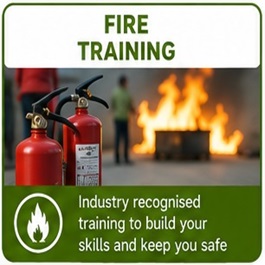
Fire Safety Training
We offer three levels of Fire Safety training to suit the needs of different workplaces and job roles:
- Fire Safety Awareness
- Fire Marshal / Fire Warden
- Firewatcher
Each course is designed to provide delegates with the knowledge and understanding required to help prevent fires, respond appropriately in the event of an emergency and support their organisation’s fire safety arrangements.
Fire remains one of the most significant risks within the workplace, with the potential to cause injury, loss of life, property damage and business disruption. Effective fire safety training helps employees understand the hazards, recognise potential fire risks and take appropriate action to protect themselves and others.
Depending on the course selected, delegates will gain an understanding of:
- The principles of fire safety in the workplace
- Common causes of workplace fires
- The fire triangle and how fires start and spread
- Employer and employee responsibilities
- Fire prevention and hazard identification
- Emergency procedures and evacuation arrangements
- Fire detection and warning systems
- The different types of fire extinguishers and their uses
- Roles and responsibilities of Fire Marshals / Wardens
- Conducting workplace fire checks and inspections
- Firewatcher duties during hot works and high-risk activities
- Raising the alarm and assisting during emergency situations
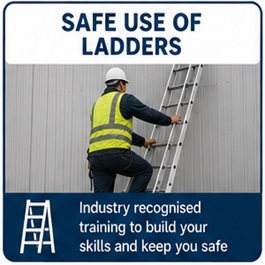
Safe Use of Ladders & Step Ladders
Ladders and step ladders are among the most commonly used items of access equipment in the workplace. However, incorrect selection, poor setup and unsafe use can result in serious injuries caused by falls from height. This Safe Use of Ladders & Step Ladders course is designed to provide delegates with the knowledge and awareness required to use access equipment safely and in accordance with current best practice.
The course covers the legal responsibilities associated with working at height, the correct selection of ladders and step ladders, inspection requirements and safe methods of use. It is aimed at anyone who uses portable access equipment as part of their work activities.
Delegates will gain an understanding of:
- Relevant legislation and responsibilities relating to work at height
- The different types of ladders and step ladders available
- Selecting the correct equipment for the task
- Pre-use inspections and identifying damaged or defective equipment
- Safe transportation, handling and storage of ladders
- Correct positioning and setup techniques
- Maintaining stability and preventing slips or movement
- Safe climbing and working practices
- Common causes of ladder-related accidents
- When alternative access equipment may be more suitable
- Good workplace practices for reducing the risk of falls

Abrasive Wheels Awareness
Abrasive wheels are widely used across many industries for cutting, grinding, polishing and finishing operations. When used incorrectly, they can present significant risks, including wheel breakage, flying particles, entanglement and serious injury. This Abrasive Wheels Awareness course is designed to provide delegates with an understanding of the hazards associated with abrasive wheels and the precautions required to use them safely.
The course covers the legal requirements, safe selection and inspection of abrasive wheels, correct mounting procedures and good working practices to help reduce the risk of accidents in the workplace.
Delegates will gain an understanding of:
- Relevant legislation and employer and employee responsibilities
- What constitutes an abrasive wheel and common applications
- Types of abrasive wheels and their intended uses
- Hazards associated with abrasive wheel equipment
- Selecting the correct wheel for the task
- Wheel markings, specifications and limitations
- Inspection and storage requirements
- Safe mounting and changing procedures
- Importance of guards, safety devices and PPE
- Pre-use checks and identifying defective equipment
- Safe operating practices and accident prevention
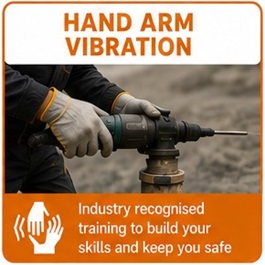
Hand Arm Vibration (HAV) Awareness
Many workplace activities involve the use of powered hand tools and equipment that generate vibration. Prolonged or excessive exposure to vibration can lead to serious and often irreversible health conditions, including Hand Arm Vibration Syndrome (HAVS), vibration white finger and carpal tunnel syndrome. This Hand Arm Vibration (HAV) Awareness course is designed to provide delegates with an understanding of the risks associated with vibration exposure and the measures required to control them.
The course covers the causes and effects of vibration-related injuries, legal responsibilities, exposure limits and practical steps that can be taken to reduce the risk of long-term health issues in the workplace.
Delegates will gain an understanding of:
- What Hand Arm Vibration (HAV) is and how exposure occurs
- The health effects of vibration exposure, including HAVS
- Signs and symptoms of vibration-related injuries
- Employer and employee responsibilities
- Relevant legislation and workplace requirements
- Exposure Action Values (EAV) and Exposure Limit Values (ELV)
- Common tools and equipment that produce vibration
- Factors that affect vibration exposure levels
- Safe working practices and control measures
- Tool selection, inspection and maintenance
- The importance of health surveillance and early reporting of symptoms
- Reducing vibration risks through planning and work management
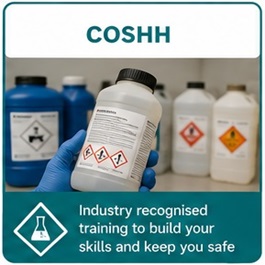
Principles of COSHH Awareness
Hazardous substances are present in many workplaces and, if not managed correctly, can pose serious risks to health. This Principles of COSHH Awareness course is designed to provide delegates with an understanding of the Control of Substances Hazardous to Health (COSHH) Regulations and the measures required to safely handle, use and store hazardous substances in the workplace.
The course covers the risks associated with exposure to hazardous substances, legal responsibilities and the practical controls that can be implemented to protect employees, contractors and members of the public from harm.
Delegates will gain an understanding of:
- The purpose and requirements of the COSHH Regulations
- Employer and employee responsibilities
- What constitutes a hazardous substance
- Routes of entry into the body and potential health effects
- Understanding hazard symbols and warning labels
- Reading and interpreting Safety Data Sheets (SDS)
- COSHH assessments and risk control measures
- Safe handling, storage and disposal of hazardous substances
- The hierarchy of control and exposure reduction methods
- Personal Protective Equipment (PPE) requirements
- Emergency procedures and spill response awareness
- Good workplace practices for managing hazardous substances
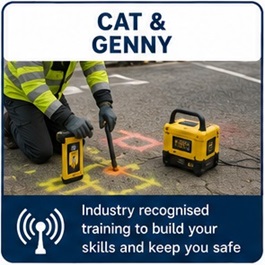
CAT & Genny Training
Underground services such as electricity cables, gas pipes, water mains and telecommunications infrastructure present significant hazards during excavation and ground disturbance activities. Striking buried services can result in serious injury, costly damage, project delays and disruption to essential services. This CAT & Genny Training course is designed to provide delegates with the knowledge and practical skills required to locate and avoid underground utilities safely.
The course combines classroom-based learning with practical exercises, enabling delegates to develop confidence in the correct use of Cable Avoidance Tools (CAT) and Signal Generators (Genny) when carrying out surveys and pre-excavation checks.
Delegates will gain an understanding of:
- The risks associated with underground services
- Legal responsibilities and industry best practice
- Types of buried utilities commonly encountered on site
- Principles of safe digging and service avoidance
- How CAT and Genny equipment works
- Different operating modes and their applications
- Pre-use checks and equipment inspections
- Conducting effective underground service surveys
- Interpreting signals and identifying buried services
- Common limitations and potential sources of error
- Marking out identified services
- Practical use of CAT and Genny equipment in realistic scenarios
The practical element of the course allows delegates to apply their knowledge by carrying out service detection exercises using CAT and Genny equipment under instructor guidance.
First Aid Training
We offer a range of First Aid courses designed to meet the needs of different workplaces, industries and risk profiles, including:
- Emergency First Aid at Work (EFAW)
- First Aid at Work (FAW)
- First Aid at Work Requalification / Refresher
- Forestry First Aid (additional module)
- Electrocution Awareness & Response (additional module)
The content and duration of training will vary depending on the course selected and any additional modules required. Our First Aid training is designed to equip delegates with the knowledge, confidence and practical skills needed to respond effectively in the event of a workplace injury or medical emergency.
First aiders play a vital role in providing immediate assistance until professional medical help arrives, helping to reduce the severity of injuries and potentially save lives.
Depending on the course undertaken, delegates may cover:
- The role and responsibilities of a First Aider
- Assessing an incident and prioritising actions
- Managing an unconscious casualty
- Cardiopulmonary Resuscitation (CPR)
- Safe use of an Automated External Defibrillator (AED)
- Choking emergencies
- Bleeding and shock management
- Burns and scalds
- Fractures, sprains and soft tissue injuries
- Medical emergencies such as heart attacks, strokes and seizures
- Record keeping and reporting requirements
- Workplace first aid equipment and facilities
- Forestry-specific emergency considerations and catastrophic bleeding control
- Responding to electrical incidents and electrocution-related injuries
All courses include practical elements designed to develop confidence and competence in dealing with real-life emergency situations.
IOSH Working Safely
The IOSH Working Safely course is a nationally recognised health and safety qualification designed for employees at all levels and across all industries. Developed by the Institution of Occupational Safety and Health (IOSH), the course provides delegates with an introduction to workplace health and safety and helps develop a positive safety culture within an organisation.
The course focuses on the responsibilities of individuals in maintaining a safe working environment, identifying hazards and understanding how everyday actions can help reduce workplace risks.
Delegates will gain an understanding of:
- Why health and safety is important in the workplace
- Individual responsibilities for health and safety
- Identifying common workplace hazards
- Assessing and controlling risks
- Improving safety performance and behaviour
- Common causes of accidents and incidents
- Environmental awareness and sustainability considerations
- Reporting hazards, incidents and unsafe conditions
- Promoting a positive health and safety culture
IOSH Working Safely is suitable for employees in any sector, including construction, manufacturing, engineering, utilities, logistics, facilities management, retail and office environments. No previous health and safety knowledge is required, making it an ideal introduction for new employees or those looking to improve their understanding of workplace safety.
Successful delegates will receive an IOSH Working Safely certificate, demonstrating their commitment to safe working practices and helping employers meet their health and safety training responsibilities.
By increasing awareness of workplace hazards and encouraging safe behaviours, IOSH Working Safely helps organisations reduce accidents, improve safety performance and create safer working environments for everyone.
IOSH Managing Safely
The IOSH Managing Safely course is a widely recognised health and safety qualification designed for managers, supervisors and team leaders across all industries. Developed by the Institution of Occupational Safety and Health (IOSH), the course provides delegates with the knowledge and practical understanding required to effectively manage health and safety within the workplace.
The course focuses on the responsibilities of managers and supervisors in identifying hazards, assessing risks and implementing suitable control measures to help create safer working environments and improve overall safety performance.
Delegates will gain an understanding of:
- The importance of health and safety management
- Manager and supervisor responsibilities
- Identifying workplace hazards and risks
- Carrying out and understanding risk assessments
- Implementing appropriate control measures
- Investigating accidents and incidents
- Measuring and improving safety performance
- Understanding common workplace hazards
- Promoting a positive health and safety culture
- Legal responsibilities and compliance requirements
IOSH Managing Safely is suitable for managers, supervisors, team leaders and anyone with responsibility for overseeing staff, work activities or workplace safety across sectors such as construction, manufacturing, engineering, utilities, warehousing, facilities management and office environments.
The course combines practical examples and real-world scenarios to help delegates apply health and safety principles effectively within their own workplace.
Successful delegates will receive an IOSH Managing Safely certificate, demonstrating their understanding of workplace health and safety management and their commitment to maintaining safe working practices.
EUSR National Water Hygiene (E-Learning)
The EUSR National Water Hygiene Scheme, is an industry-recognised qualification developed in collaboration with UK water companies to help protect public health and maintain the safety of drinking water supplies. Individuals working on clean water sites or carrying out activities on the potable water network are typically required to hold a valid National Water Hygiene registration.
Our EUSR Water Hygiene course is delivered through a flexible e-learning platform, allowing delegates to complete the training and assessment at a time and location that suits them. Upon successful completion, delegates will receive an EUSR National Water Hygiene registration, valid for three years.
The course provides delegates with an understanding of the importance of maintaining water quality and the role individuals play in preventing contamination of the public water supply.
Course Content
The National Water Hygiene programme covers four core modules:
- The Importance of Water
- Water as a Carrier of Disease
- Potential Contamination and its Consequences
- Preventing Contamination
Delegates will gain an understanding of:
- The importance of maintaining clean and safe drinking water
- How water can become contaminated
- The risks associated with waterborne diseases
- Individual responsibilities when working on clean water sites
- Good hygiene practices within the water industry
- Potential sources of contamination and how to avoid them
- The consequences of contamination for public health and water companies
- Best practice for protecting potable water supplies
Who Should Attend?
This course is suitable for anyone who requires access to clean water sites or who undertakes work on the clean water network, including:
- Water industry operatives
- Utility contractors
- Groundworkers and civils operatives
- Supervisors and managers
- Self-Lay Organisation (SLO) personnel
- Anyone involved in restricted operations on potable water assets
Typical locations requiring National Water Hygiene registration include water treatment works, pumping stations, service reservoirs, wells, boreholes and water mains networks.
Assessment & Certification
The course is completed through an online assessment consisting of multiple-choice questions.

Garden Maintenance Equipment
This practical training course is designed to provide delegates with the knowledge and awareness required to safely operate a range of garden maintenance equipment commonly used within landscaping, grounds maintenance, local authority and site maintenance environments.
The course covers the safe use, inspection and basic maintenance of equipment such as strimmers, brushcutters, pedestrian mowers, ride-on mowers, hedge trimmers, blowers and wood chippers, helping operators reduce the risk of accidents and equipment misuse.
Delegates will gain an understanding of:
- Operator responsibilities and safe working practices
- Pre-use checks and basic equipment maintenance
- Hazard identification and risk reduction
- Safe operation of garden maintenance equipment
- Correct use of PPE and safety features
- Fuel handling and storage awareness
- Working safely around members of the public and other workers
- Identifying defective or unsafe equipment
- Good housekeeping and equipment storage practices
This course is suitable for grounds maintenance operatives, landscapers, caretakers, maintenance staff and anyone involved in the use of garden maintenance equipment within the workplace.

This half-day PUWER Awareness course provides delegates with an overview of the Provision and Use of Work Equipment Regulations (PUWER) and their importance in maintaining workplace safety. The course covers the responsibilities of employers and employees, the types of equipment covered by the regulations, inspection and maintenance requirements, common workplace hazards, and the safe use of work equipment. Designed for supervisors, operators and anyone involved in the use or management of workplace equipment, the course aims to improve understanding of legal requirements and promote safer working practices.
LOLER Awareness
This half-day LOLER Awareness course provides delegates with an overview of the Lifting Operations and Lifting Equipment Regulations (LOLER) and the importance of safe lifting operations within the workplace.
The course is designed to improve awareness of legal responsibilities relating to lifting equipment, helping employers and employees understand the requirements for safe use, inspection and management of lifting operations and lifting accessories.
Delegates will gain an understanding of:
- The purpose and key requirements of LOLER regulations
- Employer and employee responsibilities
- Types of lifting equipment and accessories covered under LOLER
- Planning and carrying out safe lifting operations
- Thorough Examination requirements and inspection intervals
- Identifying defects, damage and unsafe equipment
- Safe working loads (SWL) and equipment markings
- Record keeping and compliance requirements
- Common lifting hazards and accident prevention

Chainsaw Maintenance & Cross Cutting
This Chainsaw Maintenance & Cross Cutting course is designed to provide delegates with the knowledge and awareness required to safely maintain and operate a chainsaw for basic cutting tasks.
The course covers essential safety procedures, pre-use inspections, routine maintenance requirements and safe cross-cutting techniques, helping operators reduce the risk of accidents and equipment misuse when working with chainsaws.
Delegates will gain an understanding of:
- Operator responsibilities and safe working practices
- Chainsaw components and safety features
- Pre-start checks and equipment inspections
- Correct PPE requirements for chainsaw operations
- Safe starting procedures and handling techniques
- Routine maintenance, sharpening and chain tensioning
- Fuel and lubrication awareness
- Identifying defective or unsafe equipment
- Safe cross-cutting techniques and work positioning
- Hazard awareness and accident prevention
The course combines classroom-based learning with practical instruction to help delegates develop safe working habits and improve confidence when using chainsaws in the workplace.
Portable electrical equipment is used in almost every workplace and, if not properly maintained, can present significant risks including electric shock, burns, fire and equipment failure. This Portable Appliance Testing (PAT) Awareness course is designed to provide delegates with an understanding of the principles of electrical safety, portable appliance inspections and the role of PAT testing in maintaining a safe working environment.
It is ideal for individuals responsible for carrying out basic equipment checks, managing electrical equipment or overseeing workplace safety.
Delegates will gain an understanding of:
- The purpose of Portable Appliance Testing (PAT)
- Relevant legislation and employer responsibilities
- Types of equipment that require inspection and testing
- Common electrical hazards in the workplace
- User checks and visual inspections
- Identifying damaged or defective equipment
- Electrical safety principles and risk reduction
- Inspection frequencies and risk-based approaches
- Understanding PAT labels, records and documentation
- Safe removal and reporting of defective equipment
- Good practices for maintaining portable electrical equipment

Small Tool Safety
Small tools are used daily across a wide range of industries and workplaces. Whilst often viewed as low-risk equipment, incorrect use, poor maintenance or inadequate inspection can lead to serious injuries, equipment damage and lost productivity. This Small Tool Safety course is designed to provide delegates with the knowledge and awareness required to safely use, inspect and maintain commonly used workplace tools and equipment.
The course focuses on the safe operation of portable tools, helping delegates understand the hazards associated with their use and the practical measures that can be taken to reduce risk. It also reinforces the importance of equipment inspections, defect reporting and following manufacturer guidance.
Delegates will gain an understanding of:
- Responsibilities of employers and employees when using work equipment
- Common hazards associated with portable tools and equipment
- Pre-use inspections and identifying defective equipment
- Safe operation of hand-held and portable powered tools
- Understanding tool safety features and guards
- Correct selection of tools for specific tasks
- Safe handling, storage and transportation of equipment
- Basic maintenance and care requirements
- Personal Protective Equipment (PPE) requirements
- Reporting defects and removing unsafe equipment from service
- Good workplace practices for accident prevention
The course may cover a range of commonly used equipment, including:
- Drills and drivers
- Grinders and cut-off tools
- Sanders and polishers
- Portable saws
- Nail guns and fixing tools
- Portable electrical equipment
- Battery-powered tools
- Other hand-held equipment relevant to the workplace
Abrasive Wheels (NPORS, BTS Certification)
BTS deliver training on all types of Abrasive Wheels, and include Cutting & Grinding, Truing & Dressing, Buffing and various other disc types. To find out more details on specific Abrasive Wheels training for the types you use, please contact us.
We can offer this training under our own Safety Awareness or NPORS accredited.
Duration
The duration will vary depending on the delegates’ experience, and type of certification required.
Course Overview
Safety Awareness Session Covering: 1.Hazards arising from the use of abrasive wheels (Noise-
Dust-Eyes-Vibration-Sparks). 2. Marking of Abrasive Wheels. 3. Storage, Handling, Transporting,
Inspecting and Testing of abrasive wheels. 4. The function of all Main Components (Flanges,
Washers, Brushes and Nuts). 5. Dressing & Balancing Wheels (Bench Machines). 6. Rest adjustment
(Bench Machines) 7. The Provision and Use of Work Equipment Regulations 1998.
Pre-start Checks: (Electrically Powered) Off Hand Grinding/Cut-off Machine: Wiring, Plug, Guards,
Spindle Speed Marked on Machine, Grinding Wheel undamaged and Correct Type, Correct Eye
Protection Available, Tool Rest as Close as Practicable to Grinding Face, Area Free from Debris.
Pre-start Checks: (Electrically Powered) Hand Held Grinding/Cutting-off Machine: Wiring, Plug
Guards, Spindle Speed Marked on Machine, Grinding Wheel Undamaged and Correct Type, Wheel
Not Fitted too Tightly, Correct Eye Protection Worn.
Pre-start Checks: (Petrol Driven) Cutting off Machine: Drive Belt Tension, Guard (free from Abrasive
Particles and Dust), flange Wear/Distortion, Fuel Mixture (Stored in Suitable Container), Spindle
Speed Marked on Machine, Wheel not fitted too tightly.
Inspected Wheels/Discs before use: Cracks, Damage, Blotters, Speed, Size, Correct Type for the job.
Correctly changed a Grinding Wheel/Disc
Correctly dressed a Grinding Wheel – Bench Mounted Machines Only
The above is a rough outline of the contents covered, please note that the training delivered may alter depending on the requirements of the delegates and the facilities provided.
Who should attend
Those who are required to use Abrasive Wheels.
Assessment of Training
Multiple-choice questions at the end of the theory as well as practical test (where applicable)
Pre training requirements
Depending on the type of certification chosen, delegates may have to provide proof of their previous training.
Operators who successfully pass the course will receive either an NPORS or BTS Certificate & ID card.
Course Dates
Courses are usually scheduled when requested, but we do run open courses on occasion. To find our more or to make a booking, please contact us.
CAT & Genny (Cable Avoidance Tool) Training
BTS deliver training on all types of CAT & Genny machines, please contact us if you require training on your own machine, with the make / model so we can confirm exact ratios / duration.
We can offer this training under our own Safety Awareness or arrange NPORS accredited training, if required.
Duration
1 day
Course Overview
• P.P.E Safety wear to carry out the job i.e. boots, goggles, any special equipment for
the area (R.P.E) hearing protection may affect efficiency.
• Safety zone Exclude other traffic work from area. Signs.
Other emitting devices operating e.g. Bt doing work.
• Individual Genny transmission not to be used by people with pacemakers or near
detonation devices.
• Set up area look at site plans for cable ducts, fire mains. Agree on what you are looking
for.
• Go through settings on C.A.T. Always stressing the importance of full charge on battery
• Setting power
o 1: look for E.M.F. of power cable. The more power better the signal i.e. 440 better than 110 v
o 2: look for radio signal
o 3: look for signal sent by Genny (show how to connect) some Gennys can metal detect by themselves. To use any setting open sensitivity to wide, then narrow down to find exact position (from shotgun effect down to laser).
• Walk pattern How to search area
• Marking Cross check by marking position of signal
• Shadow signals Secondary hazards, next to or underneath primary.
Who should attend
You should attend this training if you need to use a CAT & Genny to detect underground cables / services;
The CAT is used to locate underground cables / services on groundworks, excavation and construction sites. The CAT detects these cables so they can be avoided. If you were to damage a cable or any other type of buried service during an excavation, you are increasing the chances of an accident. This may result in injury or delays in work which can increase costs.
Assessment of Training
Multiple-choice questions at the end of the theory as well as practical test.
Pre training requirements
Depending on the type of certification chosen, delegates may have to provide proof of their previous training.
Operators who successfully pass the course will receive either an NPORS or BTS Certificate & ID card.
Course Dates
Courses are usually scheduled when requested. To find our more or to make a booking, please contact us.
Chainsaw
Duration: 1 day
This is our own certification on the safe use, inspection and maintenance of a chainsaw. It will show delegates how to use a Chainsaw safely, the PPE required, and how to do cross cutting.
To find out more about the Chainsaw training we offer, please get in touch.
COSHH
Control of Substances Hazardous to Health (COSHH) Training
We offer this course under our own Safety Awareness certification or QNUK accredited.
Duration
This course is 3.5 hours long
N.B. this course can be paired up with other courses that we offer, including Manual Handling and Fire Awareness / Marshall. For more information on running two courses, please contact us.
Course Overview
• Principles of the COSHH regulations and history of chemicals and people
• Types of hazardous substances including U.N. 9 classifications
• Definitions of types of health hazards
• Routes of entry into body
• Effects to body
• Target organs and delayed problems
• Eh 40 and accumulative effect
• What we must do to mitigate effects and the legislation
• Risk assessment and COSHH management including hierarchy of control
• Work-place controls and signage
• Evaluation exam
• Questions and answers
Who should attend
Those working with hazardous substances that require an understanding the principles of COSHH.
Assessment of Training
Multiple-choice questions at the end of the course.
Pre training requirements
Depending on the type of certification chosen, delegates may have to provide proof of their previous training.
Operators who successfully pass the course will receive either a BTS or QNUK Certificate & ID card.
Course Dates
Courses are usually scheduled when requested, but we do run open courses on occasion. To find out more or to make a booking, please contact us.
Food Hygiene
We can offer the Level 2 Award in Food Safety in Catering. These courses are planned on specific demand rather than open dates. To find out more information on this course, please contact us.
Harness & Fall Arrest
We can offer this training under our own Safety Awareness, IPAF or NPORS accredited.
Duration
This is a 3.5 hour course, we can run two sessions in a day, or combine this with another course, for example, Safe Working at Heights.
Course Overview
• Legislation
• The health and safety at work act 1974
• Management of health & safety 1998
• The provision and use of work equipment regulations 1998
• Working at heights 2005 regulation
• The personal protective equipment at work regulations 1992
• Safe systems of work
• Construction and maintenance
• Fitting & wearing of Harness (including inspection of equipment, identifying defects / damage, storage & documentation)
• Examination & tests
• Keeping of records
Who should attend
Those who are required to use a Safety Harness. This course is designed to give delegates a greater understanding when working at height using a Harness, Lanyard or other Fall Protection Equipment, and how to properly maintain, inspect and keep records of the equipment being used.
Assessment of Training
Multiple-choice questions at the end of the theory as well as practical test (where applicable)
Pre training requirements
There are no pre requisite requirements for this course, however a good understanding of English is beneficial.
Operators who successfully pass the course will receive either an NPORS, IPAF or BTS Certificate & ID card, where applicable.
IPAF
The way that the IPAF Harness course works has changed, it is now split into 3 different levels; Awareness, User and Inspection. The content, duration and requirements vary depending on what level of course you need. For more specific information on this, please contact the office and we can advise further.
Course Dates
Courses are usually scheduled when requested, but we do run open courses on occasion. To find our more or to make a booking, please contact us.
IOSH Training
BTS can offer:
- IOSH Managing Safely
- IOSH Working Safely
- IOSH Safety, Health & Environment for Construction Workers
Course content for IOSH Managing Safely
Who should attend
Managing Safely is designed for managers and supervisors in any sector, and any organisation worldwide.
Assessment of Training
Multiple choice questions at the end of the course, together with a workplace health and safety risk assessment assignment which must be completed within 2 weeks of doing the test, in order to pass.
Pre training requirements
There are no formal entry requirements for this course.
Candidates who successfully complete the course receive an IOSH Managing Safely Certificate.
Course Dates
BTS run courses based on demand, if there are no dates scheduled, please contact us and we can look at planning one for you. This course can be delivered on site, or at one of our offices. Any dates we have planned, will be listed below;
Course Content for IOSH Working Safely;
- Defining hazard and risk
- Identifying common hazards
- Improving safety performance
- Protecting our environment
Who should attend
Working safely is for people at any level, in any sector who need a grounding in the essentials of health and safety. It gives everyone at work an understanding of why they must work safely.
Assessment of Training
Delegates are evaluated using a multi-format question paper and a multiple choice hazard spotting exercise
Pre training requirements
There are no formal entry requirements for this course.
Candidates who successfully complete the course receive an IOSH Working Safely Certificate.
Course Dates
This course is usually scheduled as and when requested, with open dates planned around demand.
These courses are run based on demand, if there are no dates available, please contact us and we can look at planning one for you. This course can be delivered on site, or at one of our offices.
CSCS Green Labourer Card
Please note that from the 31st March 2020, CSCS will no longer accept this route as a qualification to gain your Green CSCS Labourer Card. However, there is a new IOSH course, IOSH Safety, Health & Environment for Construction Workers that has also been approved. More information on this can be found below.
IOSH Working Safely in other languages
We are currently able to offer the IOSH Working Safely course in various languages, and run open Polish courses regularly. Other languages are available, and we can advise on this if required.
Course Content for IOSH SHEC
Who the course is for
Anyone who works on or around a construction site or has cause to visit the site in the course of their work.
Remember, it is your responsibility to provide your staff with the training to ensure your site is fully compliant with safety, health and environmental regulations.
What the course covers
- Health and safety issues to be managed in the construction industry to protect employees, contractors, neighbours and others
- The basics of local law
- The importance of risk assessments and method statements and the development process
- Site requirements for the welfare of construction workers on site
- Hazards and controls associated with construction sites and activities including working at height and confined spaces
- Site environmental management including management of waste and ecology
Assessment of Training
Delegates are evaluated using a multi-format question paper and a multiple choice hazard spotting exercise
Pre training requirements
There are no formal entry requirements for this course.
Candidates who successfully complete the course receive an IOSH Certificate.
Course Dates
This course is usually scheduled as and when requested, with open dates planned around demand.
These courses are run based on demand, if there are no dates available, please contact us and we can look at planning one for you. This course can be delivered on site, or at one of our offices.
CSCS Green Labourer Card
Currently, delegates who complete the 1 day IOSH SHEC course can use this qualification to apply for their Green CSCS Labourer Card.
IOSH SHEC in other languages
We are currently able to offer the IOSH Working Safely course in various languages, and run open Polish courses regularly. Other languages are available, and we can advise on this if required.
Ladders & Step Ladders
- Duration
This course runs between 4 & 8 hours, depending on your requirements and if you do want this course combined with Fall Arrest or Working at Height regulations. Please contact us for more information. - We can offer this training through two types of certification, our own BTS Safety Awareness or an NPORS accredited course. The ratios do vary depending on the type of certification you opt for.
Course Overview
The overview below is based on Ladders & Step Ladders only:
• The Health and Safety at Work Act 1974
• Management of Health and Safety Reg 1998
• Working at Height Reg 2005
• Provision and Use of Work Equipment Reg 1998
• Personal Protection at work Reg 1998
• Manual Handling Operations Reg 1992
Selection and Parts of a Stepladder and Ladder
Pre-use checks of a Stepladder and Ladder
Site risk assessment: – overhead, underground, weather, vehicles and people
Correct use of a Stepladder and Ladder: – mounting and dismounting
Secure storage of Stepladder and Ladder
Practical
Test on Theory and Practical
Who should attend
Anyone who is required to use a Ladder or Step Ladder and would need instruction on to use one safely.
Assessment of Training
Multiple-choice questions at the end of the theory and a practical assessment.
Pre training requirements
There are no pre requirements for this course, however a good understanding of English is beneficial.
Operators who successfully pass the course will receive either a BTS or NPORS Certificate & ID card, where applicable.
Course Dates
Courses are usually scheduled when requested. To find our more or to make a booking, please contact us.
Manual Handling Training
We offer this course under our own Safety Awareness certification or QNUK accredited.
Duration
This course is 3.5 hours long
N.B. this course can be paired up with other courses that we offer, including, Safe Working at Heights, Safety Harness, Manual Handling, COSHH and Fire Awareness / Marshall. For more information on running two courses, please contact us.
Course Overview
1. Introduction
2. Legislation
a. The Health & Safety at Work Act 1974
b. The Manual handling Operations Regulations 1992
c. The Management of Health & Safety at Work Regulations 1999
3. Summary of Regulations
a. Employer’s duties
b. Employee’s duties
c. Common injuries
4. Making an Assessment
a. Lifting Capacities
i. Preparing to lift
ii. The load
b. Kinetic method of lifting
i. Use of a lifting platform
ii. Team lifting
iii. Using rollers to move a load
c. Safety Checklist
i. Manual handling & lifting
ii. Preparation
iii. Lifting & handling
iv. After lifting & handling
d. Factors to consider when making an assessment
i. The tasks
ii. The loads
iii. The working environment
iv. Individual capability
v. Other factors
Who should attend
This qualification is for those at work that require an understanding of the hazards associated with manual handling and how these can best be avoided.
Assessment of Training
Multiple-choice questions at the end of the course.
Pre training requirements
Depending on the type of certification chosen, delegates may have to provide proof of their previous training.
Operators who successfully pass the course will receive either a BTS or QNUK Certificate & ID card.
Driver CPC
BTS are approved to deliver a 7 hours Manual Handling for Drivers course, this means that not only will your delegates receive a Manual Handling certificate, but they will also gain 7 hours towards their Driver CPC periodic training. To find out more on Driver CPC, click here.
Course Dates
Course dates are added every few weeks, depending on demand, but more often than not are scheduled as and when requested. If you do not see a date below, please contact the office. To find out more or to make a booking, please contact us.
Portable Appliance Testing (PAT) (BTS Certification)
Duration: 3.5 hours
We offer Portable Appliance Testing as our own BTS Awareness course. Please contact us for further information.
Shunter
Duration: 1 – 3 days
We offer Shunter training under our own BTS certification. Please contact us for further information.
Safe Working at Heights
We can offer this training under our own Safety Awareness, PASMA or NPORS accredited.
Duration
This is a 3.5 hour course, we can run two sessions in a day, or combine this with another course, for example, Harness and Fall Arrest.
Course Overview
Work at height means work in any place where, if precautions were not taken, a person could fall a distance liable to cause personal injury. You are working at height if you:
• work above ground/floor level
• could fall from an edge, through an opening or fragile surface or
• could fall from ground level into an opening in a floor or a hole in the ground
Work at height does not include a slip or a trip on the level, as a fall from height has to involve a fall from one level to a lower level, nor does it include walking up and down a permanent staircase in a building.
1. Legislation
HASAWA 1974,
PPE Reg 1992,
Working at height reg 2005,
Manual Handling operations reg 1992,
PUWER 1998,
The management of health and safety at work reg 1999
2 Awareness and understanding of :-
Scaffolding,
Scafftags,
Mobile scaffolding
3 Awareness, Inspection, Safe use and storage:-
Harness
Lanyard
Ladders
Stepladders
Fall arrest Equipment
MEWPS
4 Rescue arrangements
Who should attend
Those who are required to Work at Height, or have an understanding of the risks when working at height. This Working at Height training course helps you to comply with the Work at Height Regulations 2005 by providing employers and employees with the necessary information needed to be able to successfully deal with working at height risks and control measures,
Assessment of Training
Multiple-choice questions at the end of the theory session.
Pre training requirements
There are no pre requisite requirements for this course, however a good understanding of English is beneficial. This is a classroom course only, no practical training is given.
Operators who successfully pass the course will receive either an NPORS or BTS Certificate & ID card, where applicable.
Course Dates
Courses are usually scheduled when requested, but we do run open courses on occasion. To find our more or to make a booking, please contact us.
Training Location
We deliver the course at both of our offices, Barry & Baglan, Port Talbot. We are also licensed to deliver the training at customers’ sites & have travelled around the United Kingdom & Europe to deliver this training.
Problem downloading? to fix download, Right click left link and choose “Save As”
Booking
How to Book
If you would like to book a place on one of the above courses and you meet the required criteria you can Contact Us
through the number at the top of the page, or fill in the enquiry form
below (please state the course you require in the message).